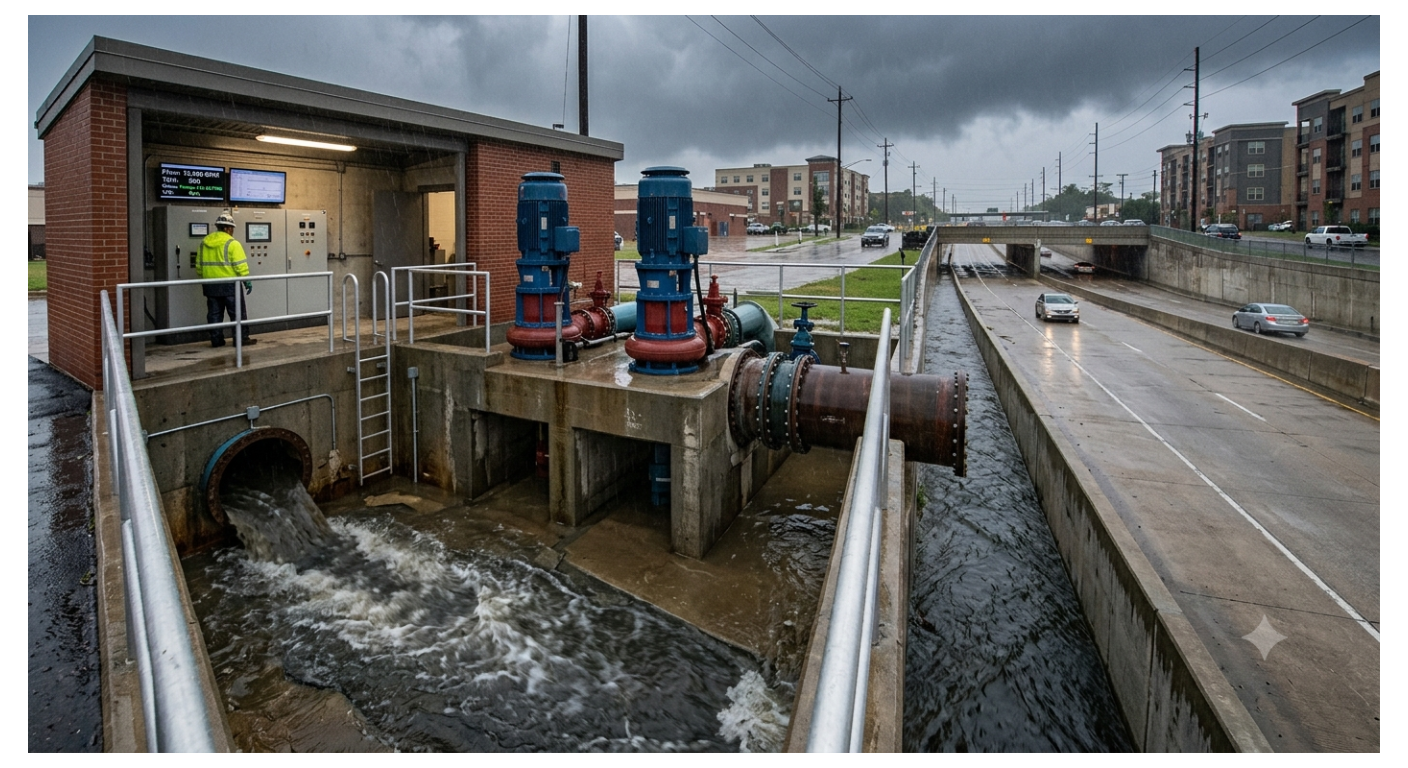
Stormwater pumping systems play a critical role in protecting buildings, roads, basements, underpasses, and essential infrastructure from flooding during heavy rainfall. Selecting the right system is not simply about choosing the biggest pump—it requires a careful assessment of hydraulic conditions, project constraints, operational requirements, and future climate risks.
The first step is understanding the site's hydrology. Engineers must analyze rainfall intensity, catchment area, runoff coefficients, ground permeability, and drainage patterns to estimate the peak stormwater flow. These values form the basis for determining the required pumping capacity. Using outdated rainfall data or underestimating runoff can lead to severe flooding and costly infrastructure damage.
Next, evaluate the Total Dynamic Head (TDH), which includes the vertical lift, pipe friction losses, fittings, valves, and discharge pressure. A pump with inadequate head will fail to deliver the required flow, while an oversized pump increases energy consumption, operating costs, and unnecessary wear on the system.
Reliability is equally important. Critical facilities such as hospitals, airports, metro stations, commercial developments, and industrial plants should incorporate duty-standby pump arrangements, backup power, and automatic level controls to ensure uninterrupted operation during extreme weather events. Smart control panels with remote monitoring can further improve system reliability by providing real-time alerts and performance data.
Pump selection should also consider solids handling capability, maintenance accessibility, energy efficiency, noise levels, and compatibility with the project's control system. Variable Frequency Drives (VFDs) can significantly improve efficiency by matching pump speed to changing inflow conditions, thereby reducing power consumption and extending equipment life.
Another key consideration is the design of the pump sump. A properly sized wet well minimizes pump cycling, prevents vortex formation, and ensures smooth operation. Additionally, selecting corrosion-resistant materials and allowing adequate maintenance access can significantly reduce lifecycle costs.
Finally, always design with future resilience in mind. Increasing rainfall intensity due to climate change, urbanization, and expanding impervious surfaces may demand higher safety factors or provisions for future system expansion.
A well-designed stormwater pumping system is not just a flood-control measure—it is an investment in long-term reliability, operational efficiency, public safety, and the resilience of modern infrastructure. Careful planning during the design stage can prevent expensive modifications and operational failures for decades to come.