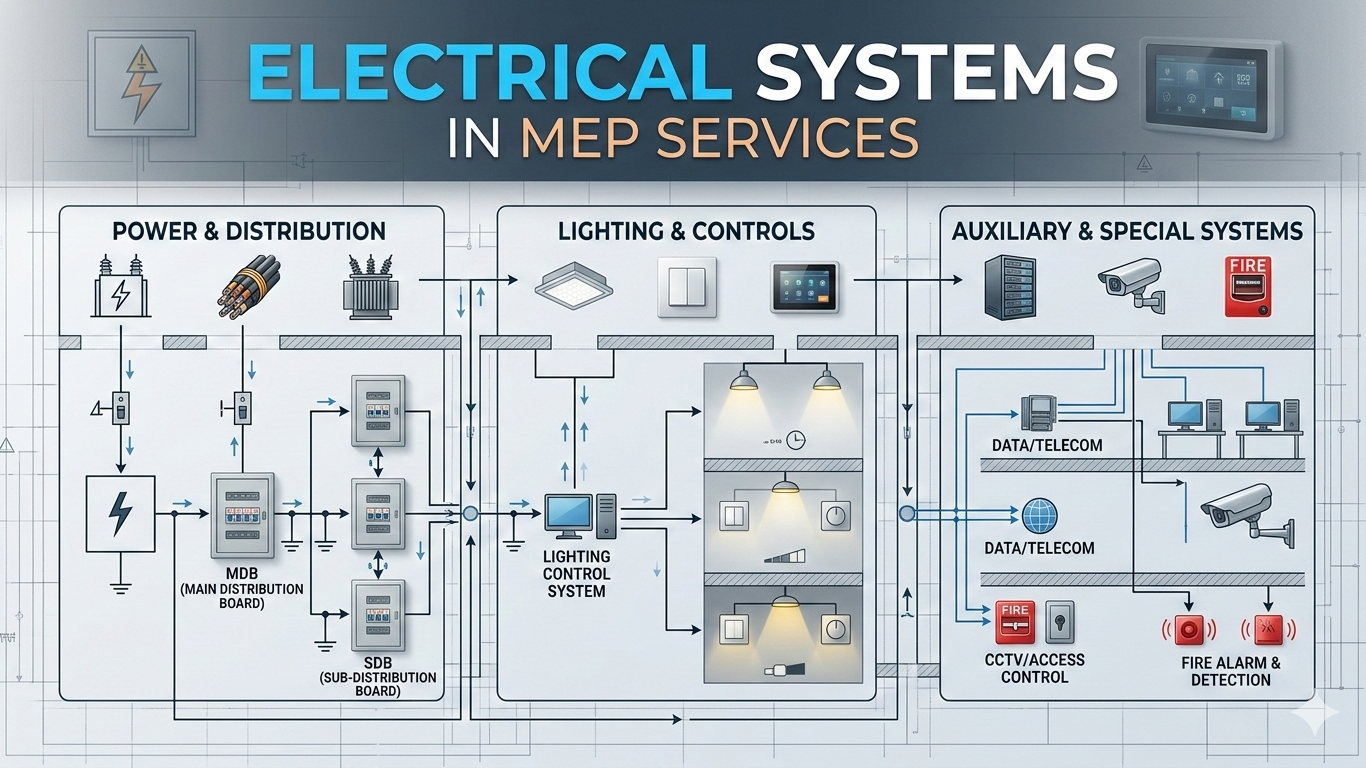
Electrical systems are a fundamental component of MEP (Mechanical, Electrical, and Plumbing) services in modern buildings. These systems are responsible for generating, distributing, and controlling electrical power required for the safe and efficient operation of various building functions. From lighting and power outlets to advanced systems like elevators, HVAC equipment, and fire safety installations, electrical systems ensure that all services operate reliably and efficiently.
In a typical building, electrical power is supplied from the utility grid through a high-tension (HT) connection. The incoming power is stepped down using transformers to low-tension (LT) levels suitable for building usage. The electrical distribution network then delivers this power through main distribution boards (MDB), sub-distribution boards (SDB), and final distribution boards to various loads within the building. Proper cable routing, cable trays, and busbar trunking systems are used to safely manage the power distribution throughout the facility.
Electrical systems in buildings are designed in accordance with national standards and codes such as the National Building Code (NBC) of India, which provides guidelines for electrical safety, load calculations, wiring practices, and fire protection requirements. Compliance with these standards helps ensure reliability, safety, and proper integration with other building services.
Sustainability has also become an important aspect of modern electrical system design. Energy-efficient lighting systems such as LED fixtures, automatic lighting controls, and smart energy management systems help reduce energy consumption. Integration with renewable energy sources such as solar photovoltaic systems is also increasingly common in buildings to support green building initiatives
Electrical systems in MEP projects also include several protective and support systems. Protective devices such as circuit breakers, relays, and earthing systems are installed to prevent damage caused by faults, overloads, or short circuits. Backup power systems such as diesel generators (DG) and uninterruptible power supply (UPS) units ensure continuity of critical operations during power outages.
Lighting systems are another key part of the electrical infrastructure. These include general lighting, emergency lighting, and energy-efficient lighting solutions designed to provide adequate illumination while minimizing energy consumption.
In addition to power and lighting, electrical systems are closely integrated with other building services such as HVAC systems, fire alarm systems, elevators, and building management systems (BMS). Proper planning, installation, and maintenance of these systems are essential to ensure safety, energy efficiency, and reliable operation of modern buildings.