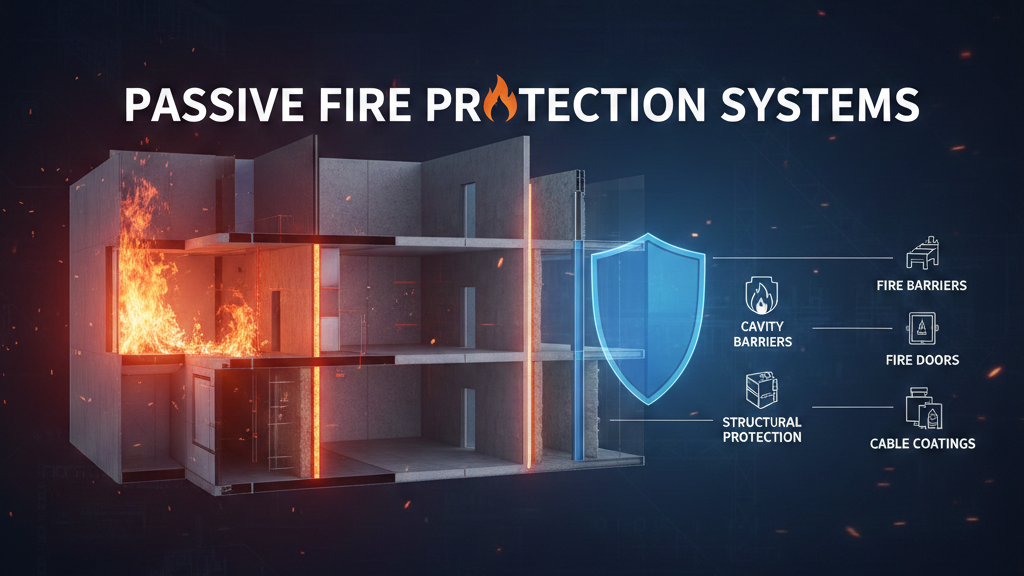
Passive fire protection works by containing fire and slowing its spread through specially designed building materials and structural elements. Unlike active systems, it does not require detection, power, or mechanical activation. It functions continuously as part of the building’s construction.
The mechanism is based on fire resistance and compartmentation. Fire-resistant walls, floors, and doors divide a building into separate sections. If a fire starts, these barriers limit the movement of flames, smoke, and heat from one area to another. This helps keep escape routes safe and protects critical structural components.
Passive protection also focuses on maintaining structural stability during fire exposure. Fire-resistant coatings, insulation, and protective coverings shield steel and concrete elements from extreme heat, preventing weakening or collapse for a specified period.
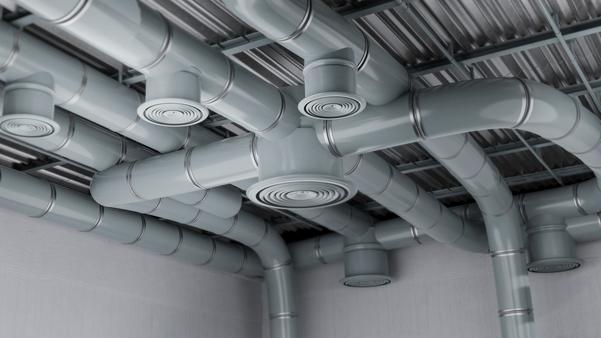
Another key function is closing and protecting gaps created by services and utility openings. Gaps around pipes, cables, and ducts are filled with fire-stopping materials to prevent smoke and flames from passing through hidden pathways.
Passive fire protection is also designed with time-based performance ratings, such as 30, 60, or 120 minutes of fire resistance. This built-in time delay is crucial because it allows occupants to evacuate safely and provides firefighters with enough time to control the fire before it spreads extensively.
In simple terms, passive fire protection follows the principle to contain, resist, isolate and finally protect the structure in the event of fire.
Common Types of Passive Fire Protection Systems include Fire-rated walls and floors, Fire doors and dampers, Fire-resistant coatings and cladding, Fire stopping and penetration seals, Structural fireproofing materials
Together, these features provide built-in protection that slows fire growth, supports safe evacuation, and gives time for firefighting operations.