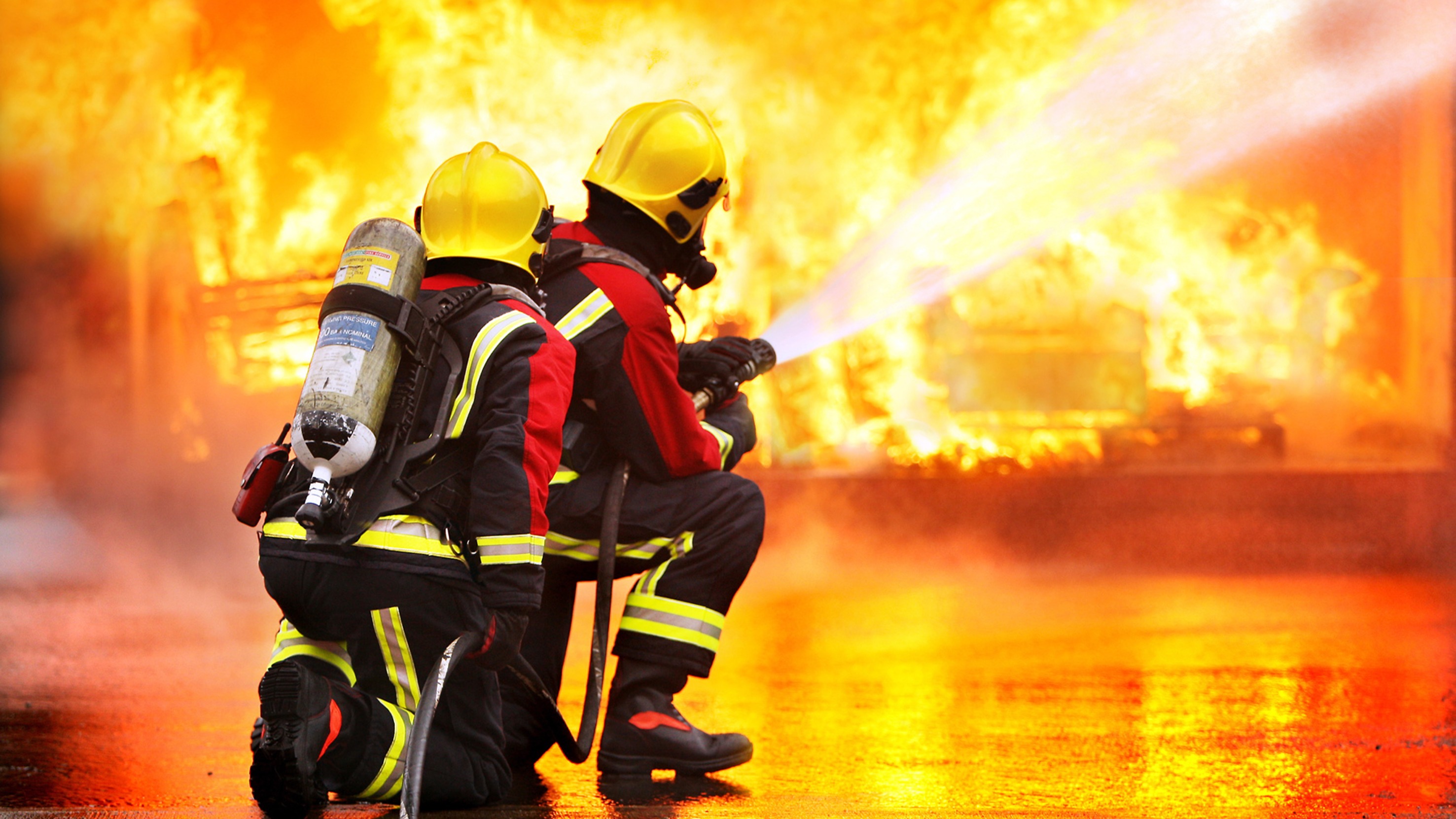
According to the American Heritage Dictionary of the English Language, fire is defined as a rapid, persistent chemical change (specifically exothermic oxidation) of a combustible material that releases heat and light, accompanied by flame. It is often defined as the burning process itself.
In short fire is any instance of destructive and uncontrolled burning, including explosion, of combustible solids, liquids, or gases.
Scientifically, fire is the result of the combination of heat, fuel, and oxygen.
Hence, the basic fire-prevention and firefighting strategy is to eliminate or control any one or more of these elements. By removing heat, cutting off the fuel supply, or restricting oxygen, the fire can be effectively controlled or extinguished during a fire outbreak.
Instances of fire include structural fires in residential, commercial, or industrial buildings; electrical fires involving electrical equipment and wiring; liquid fires from flammable or combustible liquids; gas fires involving LPG, CNG, PNG, or other gases; solid material fires involving wood, paper, plastics, or textiles; metal fires involving combustible metals; kitchen fires caused by cooking oils and fats; vehicle fires in automobiles or heavy equipment; and wildland or grass fires involving vegetation and forests.
Fire protection strategy is broadly divided into active fire protection and passive fire protection systems.