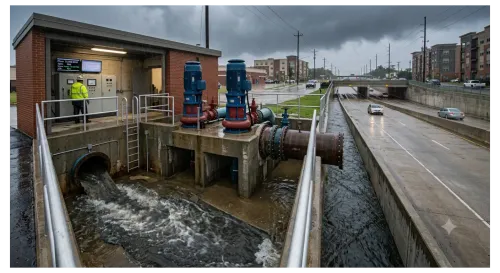
A storm water pumping station is a critical component of urban infrastructure, township, designed to manage and control storm water runoff in areas prone to flooding or water accumulation during heavy rainfall or storms. It serves to alleviate the potential risks and damages associated with excess rainwater by collecting, conveying, and pumping the water away from low-lying or flood-prone areas. The primary purpose of a storm water pumping station is to prevent urban flooding, property damage, and environmental hazards caused by water pooling and inundation.
Key components of a storm water pumping station include:
Sump or Collection Basin: The sump or collection basin is where storm water accumulates before being pumped out. It collects water from drains, channels, streets, and other drainage infrastructure.
Pumps: Pumps are the heart of the pumping station. They lift the collected storm water from the sump to a higher elevation, such as a discharge point into a watercourse or a sewage treatment plant.
Discharge Pipe: The discharge pipe carries the water pumped by the pumps to a designated outlet location, where the water is released safely into natural water bodies or other approved disposal points.
Control Systems: Modern pumping stations are equipped with sophisticated control systems that monitor water levels, control pump operation, and ensure efficient and effective management of storm water.
Power Supply: Reliable power supply is essential for the continuous operation of the pumps and control systems. Backup power systems, such as generators, are often included to ensure functionality during power outages.
Safety Features: Safety features like alarms, emergency shutdown mechanisms, and overflow prevention systems are integrated to prevent system failures and protect against overflows.
Storm water pumping stations are strategically located in areas that are susceptible to flooding, such as low-lying neighborhoods, basins, or regions with poor natural drainage. They play a vital role in maintaining public safety, protecting property, preventing infrastructure damage, and preserving the local environment.
Proper design, maintenance, and operation are crucial to ensuring the pumping station functions effectively and efficiently during storm events.

Thane
08042756402