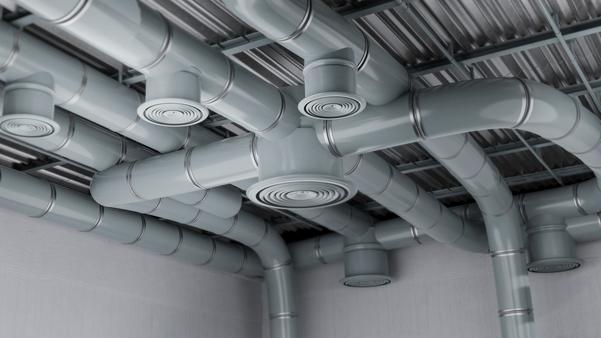
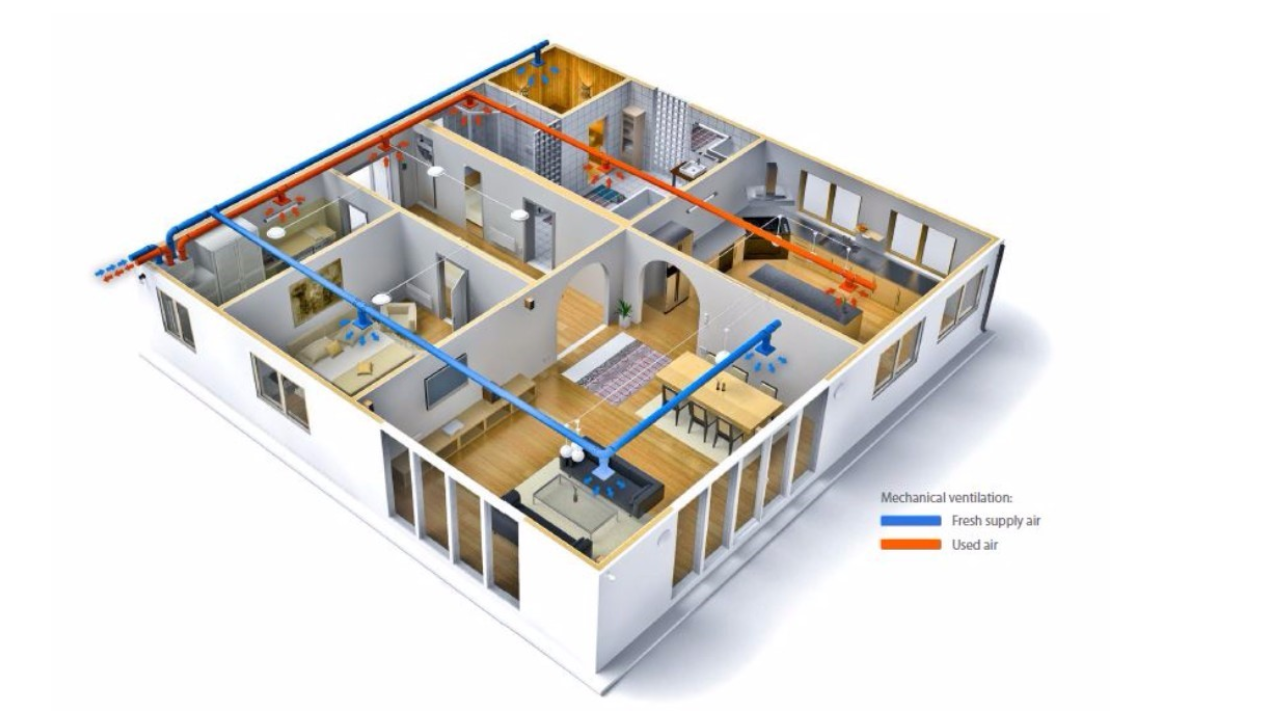
Ventilation is the process of supplying fresh air to a building and removing stale, polluted or excess-humidity air. Natural ventilation uses environmental forces such as wind and temperature differences to move air through windows, vents, courtyards and other openings. Mechanical ventilation, on the other hand, uses fans, ducts, air-handling units and exhaust systems to control the movement of air.
The two approaches are different, but they can effectively complement each other. Natural ventilation can provide fresh air when outdoor conditions are favourable, while mechanical systems can take over when temperature, humidity, outdoor air quality or wind conditions make natural ventilation ineffective.
Natural ventilation has the advantage of consuming little or no fan energy and can provide occupants with a connection to the outdoor environment. However, its effectiveness depends on weather, building orientation, wind direction, opening sizes and occupant behaviour. It is therefore difficult to guarantee consistent airflow and thermal comfort throughout the year.
Buildings are also becoming increasingly complex. High-rise towers, deep floor plates, airtight façades, underground spaces and densely occupied commercial developments make it difficult to rely entirely on natural airflow. Urban pollution, noise and increasingly extreme temperatures further reduce the practicality of keeping windows open.
Mechanical ventilation provides greater control and predictability. Airflow can be designed according to occupancy and space requirements, while filtration, cooling, heating, dehumidification and air-quality control can be integrated into the system. This makes maintaining thermal comfort and indoor air quality easier in hospitals, offices, malls, airports and high-rise buildings.
Several Indian projects demonstrate the successful use of passive and mechanical strategies. Suzlon One Earth in Pune uses extensive natural ventilation, landscaped spaces and climate-responsive design to reduce dependence on conventional air-conditioning. Similarly, Infosys' Pocharam campus in Hyderabad incorporates passive design strategies, daylighting and natural ventilation to improve energy performance. On the other hand, large developments such as DLF Cyber City, Gurugram, rely extensively on mechanical ventilation and air-conditioning because of their large floor plates, high occupancy and stringent indoor comfort requirements.
The future of building ventilation is therefore unlikely to be purely natural or purely mechanical. The most effective buildings will intelligently combine both, using natural ventilation whenever outdoor conditions permit and mechanical systems when greater control, comfort and indoor air quality are required.