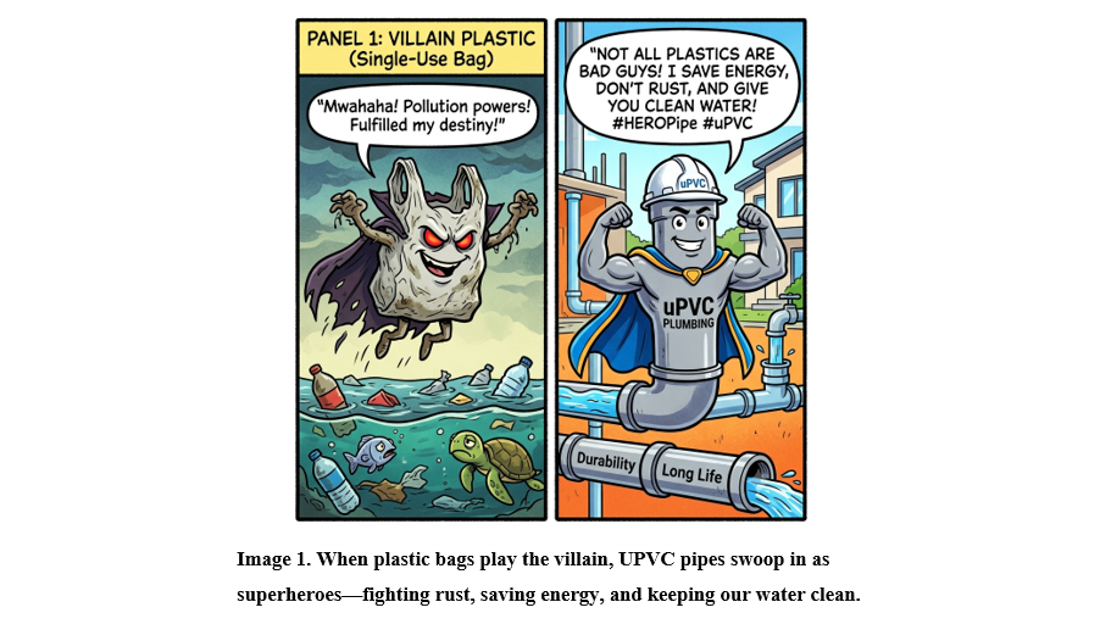
In the race toward sustainability, plastic often finds itself under scrutiny. The images of single use plastics polluting oceans and harming wildlife have shaped public perception, but in the realm of public health engineering, the story is far more nuanced. For plumbing engineers, plastics have become a cornerstone of innovation—materials that, when used responsibly, enhance efficiency, hygiene, and environmental performance. Modern piping systems made from uPVC, CPVC, HDPE, and PPR have replaced traditional metals, offering superior resistance to corrosion, temperature, and pressure. Their light weight and ease of installation translate into reduced labor, faster project timelines, and lower overall costs, all while ensuring long term reliability.
Beyond practicality, the environmental advantages of plastic piping are significant. Manufacturing and transporting these pipes consume far less energy than their metallic counterparts, and their smooth internal surfaces minimize frictional losses, reducing the energy required for pumping water through networks. Over a building’s lifetime, this efficiency contributes to measurable reductions in operational carbon emissions. Equally important is the role of plastics in maintaining water quality. Free from rust and corrosion, they safeguard potable water systems against contamination, ensuring that occupants receive clean, safe water even in regions with aggressive water chemistry.
Durability and recyclability further strengthen the case for plastics in sustainable design. High grade plastic piping systems can perform reliably for over half a century with minimal maintenance. Many manufacturers now embrace circular economy principles, designing recyclable pipes and fittings that allow installation waste and end of life materials to be reprocessed into new products. This shift from linear consumption to material recovery aligns perfectly with the sustainability ethos driving modern construction.
In the context of green building certifications such as LEED, IGBC, and GRIHA, responsible use of plastic materials supports credits for low VOC, recyclable, and energy efficient components. When combined with water saving fixtures and intelligent metering systems, plastic piping becomes an integral part of an environmentally conscious MEP strategy—proof that innovation and sustainability can coexist.
Plastic, therefore, is not inherently bad; it is our approach to its application that defines its impact. For plumbing engineers, it represents progress—a material that embodies performance, longevity, and ecological responsibility when applied with expertise and foresight. At Kromatics, we integrate these principles into every design, ensuring that our MEP systems not only meet technical excellence but also contribute to a greener, more sustainable built environment. Through thoughtful material selection and responsible engineering, we continue to prove that plastic, when used wisely, can indeed be part of the solution rather than the problem.